Robert The Devil – I think of you Robert

ROBERT LE DIABLE

Louis Aragon (1897-1982)

ROBERT LE DIABLE
Tu portais dans ta voix comme un chant de Nerval Quand tu parlais du sang jeune homme singulier Scandant la cruauté de tes vers réguliers Le rire des bouchers t'escortait dans les Halles Tu avais en ces jours ces accents de gageure Que j'entends retentir à travers les années Poète de vingt ans d'avance assassiné Et que vengeaient déjà le blasphème et l'injure Je pense à toi Desnos qui partis de Compiègne Comme un soir en dormant tu nous en fis récit Accomplir jusqu'au bout ta propre prophétie Là-bas où le destin de notre siècle saigne Debout sous un porche avec un cornet de frites Te voilà par mauvais temps près de Saint-Merry Dévisageant le monde avec effronterie De ton regard pareil à celui d'Amphitrite Enorme et palpitant d'une pâle buée Et le sol à ton pied comme au sein nu l'écume Se couvre de mégots de crachats de légumes Dans les pas de la pluie et des prostituées Je pense à toi Desnos qui partis de Compiègne Comme un soir en dormant tu nous en fis récit Accomplir jusqu'au bout ta propre prophétie Là-bas où le destin de notre siècle saigne Et c'est encore toi sans fin qui te promènes Berger des longs désirs et des songes brisés Sous les arbres obscurs dans les Champs-Elysées Jusqu'à l'épuisement de la nuit ton domaine O la Gare de l'Est et le premier croissant Le café noir qu'on prend près du percolateur Les journaux frais les boulevards pleins de senteur Les bouches du métro qui captent les passants Je pense à toi Desnos qui partis de Compiègne Comme un soir en dormant tu nous en fis récit Accomplir jusqu'au bout ta propre prophétie Là-bas où le destin de notre siècle saigne La ville un peu partout garde de ton passage Une ombre de couleur à ses frontons salis Et quand le jour se lève au Sacré-Cœur pâli Quand sur le Panthéon comme un équarissage Le crépuscule met ses lambeaux écorchés Quand le vent hurle aux loups dessous le Pont-au-Change Quand le soleil au Bois roule avec les oranges Quand la lune s'assied de clocher en clocher Je pense à toi Desnos qui partis de Compiègne Comme un soir en dormant tu nous en fis récit Accomplir jusqu'au bout ta propre prophétie Là-bas où le destin de notre siècle saigne
Robert The Devil – I think of you Robert
Your voice was charged with something of Nerval You spoke of blood most singular young man Your cruel formal verse you made it scan Laughter of butchers flanked you in Les Halles You seemed already to be laying odds Across the years I hear the resonance Poetic tyro slaughtered in advance Avenged back then by sneers at men and gods You left Compiègne I think of you Robert Just as asleep one evening you had said So you fulfilled that prophecy you made Fate of our century lies bleeding there Stood in a doorway with a twist of fries St Merry overhung by thunderclouds Impertinently staring down the crowds You gazed like royal-blood Nereides Enormous throbbing with a pallid haze Ground at your foot like foam at breast of nude Thick with fag-ends and cabbage chewed and spewed Footfall of rain and all-too-ready lays You left Compiègne I think of you Robert Just as asleep one evening you had said So you fulfilled that prophecy you made Fate of our century lies bleeding there It’s you it still is you still strolling on Shepherd of long desires dead reveries The Champs-Elysées dim below the trees Until your own domain the night is gone O Gare de l’Est first croissant of the day Black coffee percolated freshly poured Crisp morning papers pungent boulevard The metro-mouths where figures drained away You left Compiègne I think of you Robert Just as asleep one evening you had said So you fulfilled that prophecy you made Fate of our century lies bleeding there Your passing haunts the city’s grimy brows With coloured shade The Sacré-Cœur is wan As knacker daybreak flays the Pantheon With shreds and tatters Later in the Bois The sun rolls oranges itself an orange The moon transfers her seat from tower to tower Striking the belfries as they strike the hour And the wind howls beneath the Pont-au -Change You left Compiègne I think of you Robert Just as asleep one evening you had said So you fulfilled that prophecy you made Fate of our century lies bleeding there

Translation: Copyright © Timothy Adès

More poems by Louis Aragon...

Sonnet 8

Sonnet 8

Jean Cassou (1897-1986)

Sonnet 8
Il n’y avait que des troncs déchirés, que couronnaient des vols de corbeaux ivres, et le chäteau était couvert de givre, ce soir de fer où je me présentai. Je n’avais plus avec moi ni mes livres, ni ma compagne, l’âme, et ses péchés, ni cette enfant qui tant rêvait de vivre quand je l’avais sur terre rencontrée. Les murs étaient blanchis au lait de sphinge et les dalles rougies au sang d’Orphée. Des mains sans grâce avaient tendu des linges Aux fenêtres borgnes comme des fées. La scène était prête pour des acteurs fous et cruels à force de bonheur.
Sonnet 8
Only torn tree-trunks; drunken flight of crows above them; that was all: thick frost was on the fortress wall when I walked in, that iron night. I’d lost my books; the soul had gone, my bosom friend, whose sins were rife; I’d lost that girl who yearned for life when we on earth stood one to one. White sphinx’s-milk ran down the walls; red blood of Orpheus stained the flags; at windows blind as wall-eyed trolls crude hands had strung a screen of rags: a stage for actors who enjoyed being both cruel and paranoid.
Jean Cassou, arrested as a suspected Resistant on 13 December 1941, enters the La Furgole military prison in Toulouse. From Jean Cassou, ‘33 Sonnets of the Resistance’, Arc Publications.

Translation: Copyright © Timothy Adès

More poems by Jean Cassou...

He and She

Sonnet 9: Elle et Lui - Traduit de Hugo von Hofmannsthal

Jean Cassou (1897-1986)

Sonnet 9: Elle et Lui - Traduit de Hugo von Hofmannsthal
Une coupe au bord de la bouche, elle allait d’un si ferme pas et la main si sûre que pas une goutte ne se versa. Il montait un cheval farouche. Si sûre et ferme était sa main que, frémissant au coup de frein, le cheval s’arrêta soudain. Et pourtant, quand la main légère à l’autre main gantée de fer cette simple coupe tendit, ils tremblaient si fort, elle et lui, que les mains ne se rencontrèrent, et le vin noir se répandit.
He and She
Curved her lip, and curved the cup carried safely in her hand; sure and easy was her tread, not a single drop was shed. Sure and steady was his hand, and his horse high-spirited; he with mastery pulled up, made the startled creature stand. Did the strong hand grasp the cup that the fair one offered up? It was not done easily. How they trembled, he and she! Hand by hand was never found, and the dark wine stained the ground.
Jean Cassou, imprisoned by the Nazis, translated the poem of Hofmannsthal into French. Louis Aragon wrote this in his blazing Introduction:- ‘…For it would be absurd to see no more in these sonnets than the outcome of those nights of captivity: they are also a drawing-out of linguistic skill and poetic meditation by a craftsman of verse, a proven master of the modern handling of antique metre: and we must mention how far he goes in rhyming, at the limits of assonance, and his systematic taste for the weak rhyme, often combined with a rare word; and a way, too, of bringing in colloquial words and idiomatic makeweights (a donc which the unsuspecting might see as a filler, when it is the whole beauty of the line, and of the stress); and the high point of my proposition is perhaps that moment when he takes a poem of Hugo von Hofmannsthal ... but, for this story, we need to stop. ‘A sonnet of Hofmannsthal. A German sonnet, to which the patriot in the shadowy depths will give its French expression. Let no-one tell me that this confrontation of the nations is excessive: on the contrary, it is what gives this episode its unexpected value. Below the translation there is a commentary, since, for once, the captive found he could not do without a commentary: (The prisoners were forbidden anything to read. One day, though, a fragment of an issue of the Pariser Zeitung came into my hands. My cellmate and I devoured the evil print which was at any rate something to read. I had the joy of lighting on a sonnet of Hofmannsthal: Die Beiden, a famous piece from the anthologies which had always charmed me and which I adapted into our language by great efforts during one of my nights of insomnia). ‘One will not quickly forget this intellectual adventure at the heart of the most terrible of wars: this moment of reunion ... Put Jean Noir and Hofmannsthal in prison and two poets fraternise, with all the burden of condemnation that rests on this accord beyond and outside their loyalties, against their gaolers and that Germany which their gaolers obey. One will not quickly forget this adventure, pregnant with all the future, where the French part is sustained with its double splendour of moderation and excess, which charges a sonnet so powerfully that my sentence explodes, founders, drunk with a national pride whose ingredients are courage, incomparable poetry and resolve, and that loftiness of spirit that makes our poets the equals of our heroes. I imagine it was pride pure and simple that night which filled him, a man who was in prison for resisting the Germans, and yet marvellously translated Hofmannsthal in his prison. I can imagine his feelings, and by doing so I know much more than I would from a faithful report of the indomitable character of the French in captivity. I learn from this what no-one, not even this poet of ours, would presume to relate. I understand, beyond his modesty, beyond that reserve always maintained by those who have touched the pit of horror, I understand the mechanism which has come into play so often in these inexpiable years, which will amaze the world with our martyrs, this harvest of heroism, this unbelievable profusion of magnificent lives and deaths, which give today's France a hundred or a thousand times that which sufficed to make the grandeur of Rome. I understand by this anecdote of the translated sonnet the greatness of our heroes, their simplicity, even their silence. One will not quickly forget this intellectual adventure.’ From Jean Cassou, 33 Sonnets of the Resistance and other poems, Arc Publications. I speak here: https://www.youtube.com/watch?v=WtPx7UayrkM

Translation: Copyright © Timothy Adès

More poems by Jean Cassou...

Sonnet 4

Sonnet 4

Jean Cassou (1897-1986)

Sonnet 4
J'ai rêvé que vous portais entre mes bras, depuis la cour jusqu'à votre salon obscur. Vous sembliez une soeur des chères créatures que j'adore, mais je ne vous connaissais pas. Il faisait une nuit de lune et de frimas, une nuit de la vie, sonore d'aventures. Tandis que je cherchais à voir votre figure, je vous sentais légère et tremblante de foi. Puis je vous ai perdue comme tant d'autres choses, la perle de secrets et le safran des roses, que le songe ou la terre offrirent à mon coeur. Signes de ma mémoire, énigmes, tout me mène, avec chaque soleil formé à si grand peine, au chef-d'oeuvre d'une fort et lucide malheur.
Sonnet 4
I dreamed that in my arms I carried you up from the courtyard to your room, lit low. You seemed a sister of that darling crew I love, but you were one I did not know. It was a night of frost, a moonlit night, a night of life, romantic, ringing, bold. I tried to see your face, and you were cold, you shivered to my touch, and you were light. And then I lost you, lost like so much more, saffron of roses, pearl of secret store, that earth or dream had offered to my soul. Riddles, remembered signs, bring back to me, with every sun that forms so painfully, this culminating, strong, transparent hell.
From Jean Cassou ’33 Sonnets of the Resistance’, Arc Publications

Translation: Copyright © Timothy Adès

More poems by Jean Cassou...

We'll be sleeping side by side

Nous dormirons ensemble

Louis Aragon (1897-1982)

From: Le fou d'Elsa
Nous dormirons ensemble
Que ce soit dimanche ou lundi Soir ou matin minuit midi Dans l'enfer ou le paradis Les amours aux amours ressemblent C'était hier que je t'ai dit Nous dormirons ensemble C'était hier et c'est demain Je n'ai plus que toi de chemin J'ai mis mon cœur entre tes mains Avec le tien comme il va l'amble Tout ce qu'il a de temps humain Nous dormirons ensemble Mon amour ce qui fut sera Le ciel est sur nous comme un drap J'ai refermé sur toi mes bras Et tant je t'aime que j'en tremble Aussi longtemps que tu voudras Nous dormirons ensemble.
We'll be sleeping side by side
Sunday, Monday, any day Dawn or dusk, midnight, midday, Damned in hell or sanctified, Loves alike and loves allied, As I told you yesterday, We’ll be sleeping side by side. Now, tomorrow, yesterday You alone to be my way, In your hands my heart I lay, Lively, with your heart to guide: Long as human time shall bide We’ll be sleeping side by side. What has been shall be, my sweet: Heaven is on us like a sheet. I embrace you, mortified, Trembling, lovelorn, petrified. For as long as you say yea, We’ll be sleeping side by side.

Translation: Copyright © Timothy Adès

More poems by Louis Aragon...

Sonnet 24

Sonnet 24

Jean Cassou (1897-1986)

Sonnet 24
*Briques et tuiles, etc* - Verlaine Plomb, zinc, et fer, ô les charmants petits enfers pour les amants! Mer et desert: l'événement n'a rien à faire pour le moment. À tous nos coups le néant joue échec et mat. L'histoire close plus jamais n'ose produire un Acte.
Sonnet 24
[Verlaine's Belgian jaunt with Rimbaud] Lead, iron and tin, snug sulphur-mines for Valentines to sizzle in! Ocean and sand: the great event is impotent as matters stand. All that we do the void has checked, checkmated too. The final page has no Effect that it can stage.
In '33 Sonnets of the Resistance', Arc Publications

Translation: Copyright © Timothy Adès

More poems by Jean Cassou...

AND THERE WAS LIGHT

ET LA LUMIÈRE FUT

Jean Cassou (1897-1986)

Joyeux Pâques! Un grand poème de JEAN CASSOU, chef de la Résistance au sud-ouest, à qui de Gaulle au chevet donne la Croix de la Libération. Communiste, il quitte le parti contre le pacte Molotov-Ribbentrop ; il défend Tito qui rompt avec Staline : on le dénonce. Cassou créera le Musée National d’Art Moderne ; il recevra 1971 le Grand prix national des Lettres, 1983 le Grand Prix de la Société des Gens de Lettres, et la Médaille d'or du mérite des beaux-arts (Espagne). Néanmoins il reste ‘le grand méconnu’. Ce poème du recueil ‘La rose et le vin’ est écrit en 1941 et publié en 1952 chez l’Imprimerie des Poètes. Avec ses échos religieux, il est plein de lumière et d’espoir.
ET LA LUMIÈRE FUT
Et la lumière fut, qui éclaire tout homme en ce monde et toute la misère du monde, et qui forme l'éclat des raisins et des pommes et les jaunes frissons sous les feuilles profondes. Et la lumière est pure alors qu'elle arrondit ses touches de splendeur sur la masse des ombres, comme une lampe aimée que la main de la nuit plonge au fond de l'amour par un escalier sombre. Et la lumière est pure et la lumière est sainte, et la lumière parle avec des mots joyeux plus haut que la tempête et plus fort que la plainte qui réveille en sursaut les dormeurs malheureux. Sois louée, sois bénie, lumière inexhaustible, thyrse de poésie, serpent de guérison, peine et joie consenties, immanence visible, conscience casquée, ô déesse raison! Sois bénie, et béni soit ton règne efficace: qu'il étende ses bras de révélation comme des nappes d' or au large des espaces et y fasse tinter les tours bleues des Sions. Manifeste les sons étreints par le silence, délivre les pitiés, les charmes engourdis: il est encor des poids pour la juste ba1ance, il est encor des pleurs qui n'ont pas été dits. Des abîmes de deuil et de mémoires vaines attendent ton signal, et d'obscurs continents fumant, sur leurs degrés, d'odeurs suburréennes, et des clairons muets au seuil des monuments. Ta suscitation doit faire comparaître toutes ces draperies grouillantes, mille espoirs, poings convulsés aux grilles rouges des fenêtres, comme une tragédie fermée de toutes parts. Éclaire de tes yeux la minutie des rides, la multiplicité des plis, la belle trace des vagues accouplées et des cheveux rapides que dénombre le vent aux profils qui s' effacent. Exalte les vallées où les peuples gémissent, couchés sur les tombeaux des âges embaumés, fends les temples, pénètre au secret des calices où bourdonne l'essaim des anges oubliés. Prends les rues dans tes rais comme des ronces. Mêle à tes fruits irisés les bulles des ruisseaux, la paille des fumiers, le cri des étincelles farouche et sans répit sous le choc des marteaux. Ouvre les portes! L'âme est noire dans son coin, et cette odeur de sang qui brûle plaît aux mères. Mais tu sais rire, et d'un rire chaste et sans fin, jusque parmi les fleurs pourries des cimetières, toi, tu sais rire, et comme d'un rire espagnol, torrent de flamme et d'eau sauvage, ma lumière, mon grand sarcasme phrygien, ma carmagnole, cheval, cheval terrible, ô la plus libre et fière des apparitions au-dessus de nos têtes! Tue les dieux mauvais, tue! Oh! quel dégoût croupit dans nos siècles comme des restes de planètes retombés loin de toi dans l'éternelle nuit! Mais ne nous quitte pas! Embrase jusqu' à l'or la plaie qui nous dévore et ces choses petites et innocentes, nées à peine dans la mort, la pauvre mort chétive et elle aussi bénite, la misérable mort d'ici, notre seul bien, (et c'est pourquoi tu sais que nous l'aimions... ). Mais d'autres amours nous captiveront que ce triste rien, quand tout n'appartiendra plus qu' à ta flamme haute, porté vers cette épée ascensionnelle. Et tout sera clair et présent. Radieuse, la terre aura vêtu sa robe virginale d'août pour boire infiniment le vin de la lumière.
AND THERE WAS LIGHT
And there was light, that lightens everyone that lives, and lightens all this world’s distress, puts bloom on grapes and apples in the sun, under low leaves a shivering yellowness. The light is pure when it rounds out its glory on fields of shadow touched with splendour bright, a well-loved lamp to reach an upper storey, thrust into Love’s depths by the hand of night. The light is pure, the light has sanctity, and the light speaks, its words rejoice the heart, above the storm and moaning threnody that wakes unhappy sleepers with a start. Be praised, be blessed, light inexhaustible, serpent of healing, poets’ thyrsus, yes, pain and joy sanctioned, immanence visible, goddess of reason, helmeted consciousness! Blessings be on you and your potent reign: may it stretch forth its arm, enlightening, like cloth of gold spread wide across the plain, and make the high blue towers of Sions ring. Show forth the sounds that were constrained in silence: set pity free, shake loose the magic word; there are yet makeweights for the rightful balance, there are yet tears whose story is unheard. Chasms of mourning and vain memories await your signal; murky continents, steaming with old Suburan fragrances; mute bugles on the steps of monuments. At your arousal, everything appears: the thousand hopes, the vermin-ridden drapes, the fists convulsing at red window-bars, a tragedy that nobody escapes. Illumine with your eyes the waves in pairs, the plethora of folds, the lovely trace of wrinkled intricacies, and quick hairs, counted by winds, on brows the years efface. The peoples cry aloud. Exalt the valleys! They lie on centuries entombed in balm. Cleave, cleave the temples, penetrate the chalice where the forgotten angels buzz and swarm. Embrace roads in your rays like briars. Bring, mingled with rainbow fruits, the rivers’ bubbles, straw of the dunghills, sparks that fiercely sing, relentless, as the hammer-blow redoubles. Open the gates! The soul is black, unseen; this is the burnt-blood smell a mother craves. But you laugh well: your laugh is endless, clean, even to the flowers that wither on the graves. Yes, you laugh well, my light, à l’espagnole, flame and wild cataract, a streaming flood, my Phrygian caustic wit, my carmagnole, terrible steed, the freest and most proud of airy apparitions. Kill, oh kill the wicked gods! As dregs of planets fall, our aeons of disgust are festering still, crashed far from you in night perpetual. But stay amongst us! Burn to glowing gold the wound that feasts on us, the littleness, things small and innocent and scarcely foaled before they die the death we also bless; death’s all we have on earth, and that is why you know we loved it ... Many a better love will charm us than that dismal nullity, when all reverts to your high flame above, nearing the sword of the ascension. All shall then be clear and present. Beaming bright, Earth in her August garments virginal shall infinitely drink the wine of light.
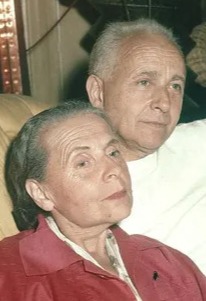
Jean Cassou the Resistant broke with the Communists; composed 33 Sonnets in his head, in a Vichy prison (Arc Publications); created the Musee National d'Art Moderne; still 'the great unrecognised'. Dual text and more on the PRé page #pourunerépubliqueécologique, 4 April 2021.

Translation: Copyright © Timothy Adès

More poems by Jean Cassou...

The Mouse from England

La souris d'Angleterre

‘Nino’ – Michel Veber – (1896-1965)

La souris d'Angleterre
C'était une souris qui venait d'Angleterre, Yes, Madame, yes, my dear, Ell' s'était embarquée au port de Manchester Sans même savoir où s'en allait le navire. No, Madam', no, my dear. Elle avait la dent long' comme une vieille Anglaise, S'enroulait dans un plaid à la mode écossaise Et portait une coiffe en dentelle irlandaise. Dans le port de Calais, elle mit pied à terre, Yes, Madame, yes, my dear, Elle s'en fut bien vite à l'hôtel d'Angleterre, Et grimpe l'escalier tout droit sans rien leur dire, No, Madam', no, my dear, Le grenier de l'hôtel lui fut un vrai palace, La souris britannique avait là tout sur place, Du whisky, du bacon, du gin, de la mélasse. Chaque soir notre miss faisait la ribouldingue, Yes, Madame, yes, my dear, C'était toute la nuit des gigues des bastringues, Les bourgeois de Calais ne pouvaient plus dormir, No, Madam', no, my dear, En vain l'on remplaçait l'appât des souricières, Le Suiss' par le Holland', le Bri' par le Gruyère, Rien n'y fit, lorsqu'un soir on y mit du Chester. C'était une souris qui venait d'Angleterre, Yes, Madame, yes, my dear.
The Mouse from England
Now once upon a time there was an English mouse Yes, Madame, yes, my dear. She sailed from Liverpool – she must have been a Scouse. She didn’t even know the likely port-of-call. No, Madame, no, my dear. Long in the tooth she was, like any English crone, She wore a tartan plaid, the kind the Scots put on, And proudly on her head an Irish lace confec-ti-on. She came to Calais port, and there she disembarked Yes, Madame, yes, my dear. And to the Angleterre Hotel she quickly walked. Straight up the stairs she went, she said no word at all. No, Madame, no, my dear. The loft of the hotel outdid the great palaces: The lucky British mouse was well supplied, with masses Of whisky, of bacon, of gin, and of molasses. Each evening our Miss Mouse went on a jolly spree, Yes, Madame, yes, my dear. With noisy reels and jigs and shouts of revelry. The burghers of Calais could get no sleep at all No, Madame, no, my dear. The cheeses in the traps were switched to no avail, The Swiss, the Dutch, the Brie, so many bound to fail, Till at last one night they put some Wensleydale. For once upon a time there was an English mouse Yes, Madame, yes, my dear.

Translation: Copyright © Timothy Adès

More poems by ‘Nino’ – Michel Veber –...

Curfew

Couvre-feu

Paul Eluard (1895-1952)

Couvre-feu
Que voulez-vous la porte était gardée Que voulez-vous nous étions enfermés Que voulez-vous la rue était barrée Que voulez-vous la ville était matée Que voulez-vous elle était affamée Que voulez-vous nous étions désarmés Que voulez-vous la nuit était tombée Que voulez-vous nous nous sommes aimés
Curfew
What do you think the door was closed What do you think they placed a guard What do you think the street was barred What do you think the town was lost What do you think she was half-starved What do you think we were disarmed What do you think the darkness loomed What do you think we lived we loved

Translation: Copyright © Timothy Adès

More poems by Paul Eluard...

She Loves

L'amoureuse

Paul Eluard (1895-1952)

L'amoureuse
Elle est debout sur mes paupières Et ses cheveux sont dans les miens, Elle a la forme de mes mains, Elle a la couleur de mes yeux, Elle s'engloutit dans mon ombre Comme une pierre sur le ciel. Elle a toujours les yeux ouverts Et ne me laisse pas dormir. Ses rêves en pleine lumière Font s'évaporer les soleils Me font rire, pleurer et rire, Parler sans avoir rien à dire.
She Loves
On my two closed eyes she stands And her hair is in my hair And her shape is of my hands And her shade is of my eyes She is swallowed in my shadow As a stone against the skies Her eyes are ever open She will never leave me sleeping At her dreams in light of day Suns evaporate away I go laughing laughing weeping Speaking nothing can I say

Translation: Copyright © Timothy Adès

More poems by Paul Eluard...